ErgoFoundry is reader-supported. When you buy through our links, we may earn a commission at no extra cost to you. We test and research every product we recommend.

Why "Normal" Office Chairs Don't Work for Tall People
Standard office chairs are designed for the average desk worker — and "average" in the chair industry means roughly 5'8" to 5'10". If you're 6'2", you're already outside the design spec. If you're 6'4" or 6'5", the gap between what the chair was built for and what your body needs is large enough to cause real problems.
Here's what goes wrong anatomically when a tall person sits in a standard chair:
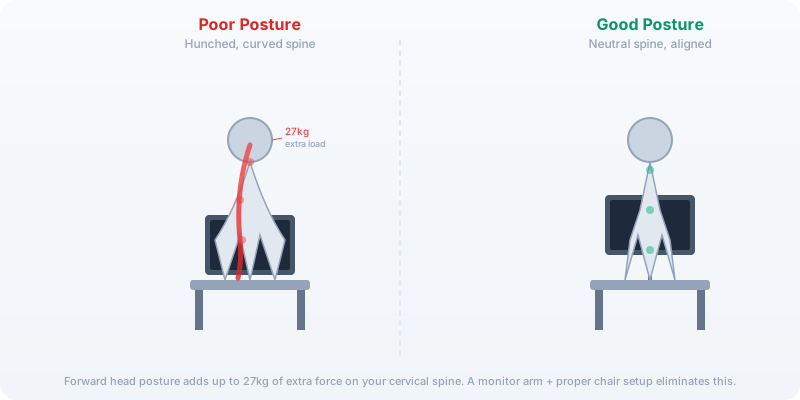
Seat depth — the biggest problem: A standard chair seat pan is 18-19" deep. That leaves about 2-3 fingers of space between the seat edge and the back of your knee if you're around 5'9". At 6'2", your femurs are longer — you need 20-22" of seat depth to get the same thigh support. When a seat is too short, the front edge cuts into the back of your thighs, and you either perch on the front half of the chair (no back support) or slide forward until your lower back loses contact with the lumbar curve. Either way, your spine is unsupported.
Backrest height: The lumbar curve in the backrest is positioned to hit the average user's lower back. On a tall person, that same curve hits at mid-back — which is both useless and uncomfortable. It pushes your thoracic spine forward without supporting your actual lumbar region. The top of the backrest, which should reach your shoulder blades, might only reach your mid-back. If the chair has a headrest, it digs into your shoulders or pushes your head forward — the "headrest pushing shoulders forward" problem that tall people know all too well.
Armrest height: Tall people have longer torsos and longer arms. Standard armrests max out at a height that leaves tall users with elbows below desk level and shoulders hunched. If the armrests are 4D (adjustable in four directions), you can sometimes compensate. If they're 2D or fixed, you can't.
Seat height from floor: Tall people need the seat higher off the ground for proper knee angle (90°, feet flat on floor). Most chairs max out at 20-21" of seat height. For someone 6'4"+, that can be borderline. Add long legs and a non-adjustable seat depth, and you're compromising on at least two dimensions simultaneously.
Important distinction: "Big and tall" ≠ just tall. Many chairs marketed as "big and tall" are primarily built for weight capacity — 400, 500, even 600 lbs — with wide seats and heavy-duty gas cylinders. They're built for large-framed users, not necessarily tall ones. A lean 6'5" person weighing 190 lbs doesn't need a 400 lb weight capacity chair with a 22" wide seat. They need height accommodation — seat depth, backrest height, armrest range. The categories overlap but are not the same. This article focuses on height, not weight.
The Tall Person's Chair Checklist: Measurements That Actually Matter
Before looking at specific chairs, here are the numbers to check for every chair you consider:
- Minimum seat depth: 20" (ideally 21"+, or an adjustable seat pan with a slider)
- Seat height range: Should go to at least 20" from floor (knees at 90° when feet are flat)
- Backrest height: Should reach your shoulder blades at minimum. Taller than that is better — full back coverage reduces the "headrest pushes shoulders forward" effect.
- Lumbar support: Must be height-adjustable. A fixed lumbar curve will be in the wrong place. Adjustability range should be generous.
- Armrest adjustability: 4D preferred (up/down, forward/back, in/out, rotate). Minimum: must go high enough that your elbows are at 90° with forearms parallel to desk surface.
- Headrest (if included): Must be height-adjustable enough that it supports the back of your head without pushing your shoulders forward. Many headrests only adjust 2-3" — not enough for tall users.
These numbers come from anthropometric data. Standard office chairs are designed for the 5th percentile female to 95th percentile male — but the 95th percentile male in seated height measurement is roughly 6'1". Anyone above that is outside the chair industry's design range. If you're 6'3" or taller, every chair purchase requires checking measurements, not reading marketing copy.
The 6 Best Office Chairs for Tall People — Tested & Ranked
1. Steelcase Leap Plus — Best Overall ($1,400–1,600)
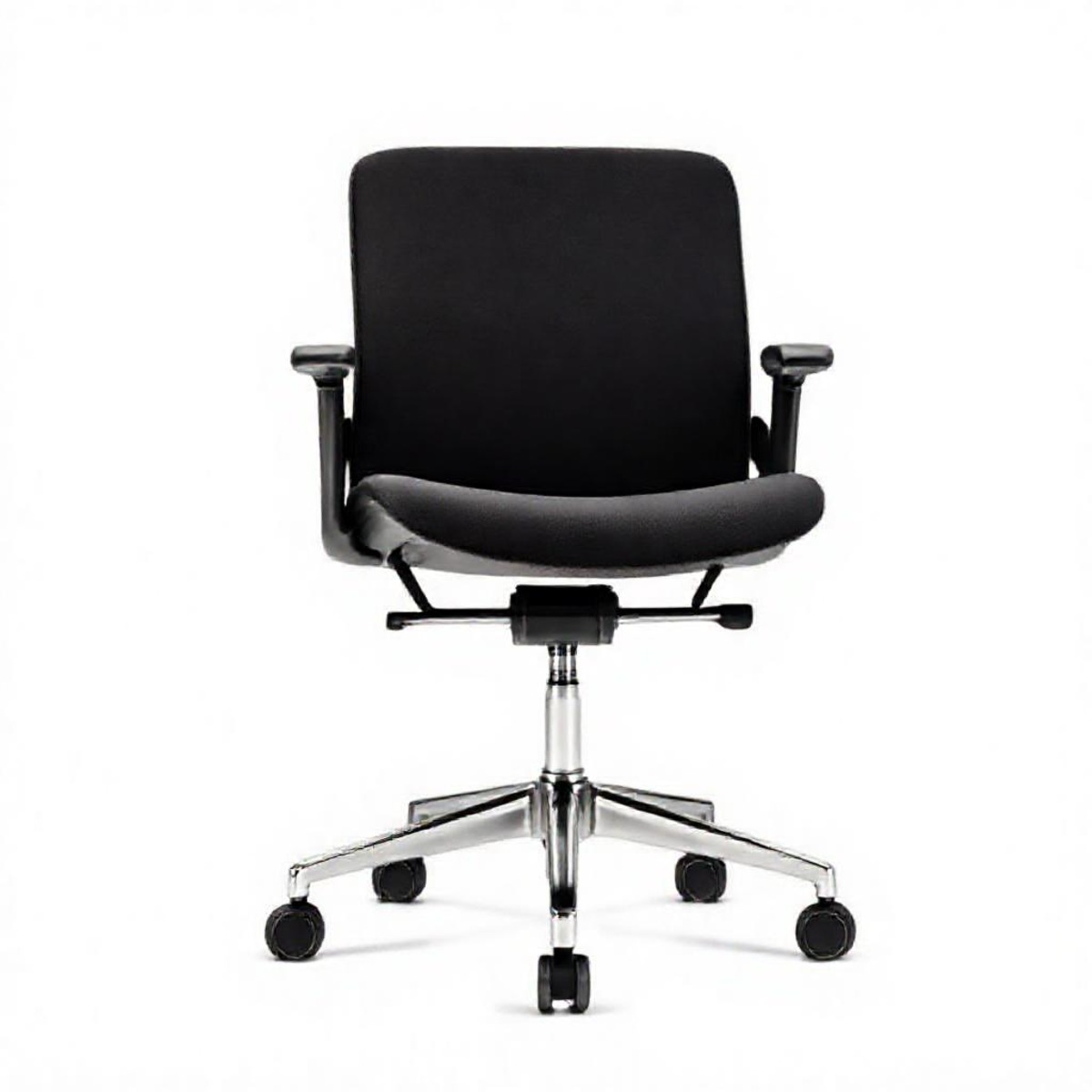
The Steelcase Leap Plus is built specifically for larger and taller frames. It's one of the very few chairs designed from the ground up for users outside the standard anthropometric range, rather than being a standard chair with a few dimensions stretched.
Key measurements: Seat depth 22.75" (with additional slider adjustment — you can make it even deeper), weight capacity 400 lbs, taller backrest than the standard Leap, wider seat pan. The LiveBack system adjusts to your spine's individual curve as you move — it flexes with your spine rather than forcing your spine into a fixed shape.
What makes it work for tall people: The adjustable seat depth slider gives you an extra 3" of range beyond the already-generous 22.75". The backrest is proportionally taller. The 4D armrests have enough vertical range for long arms. And the weight capacity means the gas cylinder doesn't struggle even if you're tall AND heavy — a combination that defeats many standard chairs.
Drawbacks: It's expensive — $1,400-1,600 new. Rarely available used because it's a niche model produced in smaller volumes. The seat is firm (Steelcase's signature feel) — not uncomfortable, but if you want plush, this isn't it. The armrest pads are on the smaller side for such a large chair.
Verdict: If money is no object and you're 6'3" or taller, this is the chair. It's the only chair that some 6'5"+ reviewers say actually fits them without compromise. The investment is significant, but if you've spent years in chairs that hurt, the value proposition is clear.
2. Herman Miller Aeron — Size C ($1,200–1,400 new, $500–700 used)
The Aeron Size C is the "large" version of Herman Miller's iconic mesh chair, designed for users roughly 6'2" to 6'7". It's the most widely available tall-compatible chair on the used market, which makes it the practical pick for many tall buyers.
Key measurements: Seat depth 18.5" (but the mesh suspension effectively supports longer thighs), seat width 20.5" (the widest Aeron), backrest height reaching to shoulder blades on users up to ~6'5". PostureFit SL provides adjustable lumbar and sacral support. Weight capacity 350 lbs for Size C.
What makes it work for tall people: The mesh seat doesn't have a rigid front edge — it's suspended, so your thighs are supported along their full length without a hard cutoff. The Size C backrest is proportionally taller and the PostureFit pad covers the lumbar-to-sacral area properly. The mesh stays cool — tall people tend to run warmer because of larger body surface area, and the Aeron's all-mesh design is unbeatable for temperature regulation.
Drawbacks: The seat pan has no depth slider — what you see is what you get. The hard frame edges around the mesh seat bother some people (your thighs rest against plastic). The armrests are 2D on older models (height and angle only) — you need the remastered version (post-2017) for 3D armrests. Size C is harder to find used than Size B. The Aeron's distinctive look isn't for everyone.
Verdict: The best tall chair available on the used market. Size C Aerons at $500-700 used are a genuine bargain relative to their build quality and lifespan. New at $1,200+, the value proposition weakens unless the mesh design is exactly what you want.
3. FlexiSpot OC3-Pro — Best Value for Tall (~$300–400)
The OC3-Pro is FlexiSpot's dedicated big-and-tall chair, and it's the best new-chair option under $400 that genuinely accommodates tall users. It's not in the same league as the Leap Plus or Aeron, but it's less than a third of the price.
Key measurements: Seat depth 20.5" (with an additional 2" of seat slider adjustment — total effective depth ~22.5"), seat height maxes at ~21.5", backrest reaches to upper back/shoulder level on users up to ~6'4", weight capacity 350 lbs. Adjustable lumbar support (height), flip-up armrests (2D), high-density foam seat.
What makes it work for tall people: The seat depth slider is the standout feature — you can extend the seat pan to 22.5" total depth, which matches the Leap Plus on paper. The backrest is genuinely tall, reaching the shoulder blades of tall users. The seat height range accommodates long legs. The foam cushion is thick enough that tall users (who exert more pressure per square inch due to longer thigh leverage) don't bottom out.
Drawbacks: The armrests are only 2D (height and flip-up). No width or depth adjustment, which would help tall users with broad shoulders. The build quality is good for the price but not premium — the armrests have some play, the lumbar adjustment mechanism feels basic, and the fabric isn't as durable as Steelcase or Herman Miller offerings. The headrest is minimal and doesn't adjust as high as some tall users need.
Verdict: The smart pick if you're tall and can't (or won't) spend $1,000+ on a chair. At $300-400, it's a fraction of the Leap Plus price but covers the essential tall-user measurements. If you pair this with a standing desk that adjusts high enough, you have a tall-friendly setup for well under $800 total.
Check Price on FlexiSpot → (12% commission supports our work) View on Amazon →
4. Staples Hyken XL — Best Budget (~$240)
Staples took their popular Hyken chair and created an "XL" version specifically to address fit issues for taller and broader users. At ~$240, it's the cheapest chair on this list that's designed with tall users in mind.
Key measurements: Seat depth approximately 19.5" (deeper than the standard Hyken but still borderline for very tall users), backrest reaches to upper shoulders, headrest is height-adjustable with a generous range, mesh back with adjustable lumbar, weight capacity 300 lbs.
What makes it work: The XL designation is real — the backrest is taller, the seat is deeper, and the headrest adjusts higher than the standard Hyken. The mesh back is good for temperature. The price makes it accessible. The headrest actually works for users up to about 6'2".
Drawbacks: Seat depth is still only ~19.5" — fine for 6'0" to 6'2", but 6'3"+ will feel the front edge under their thighs. The armrests are height-adjustable only (1D) and don't go especially high. The build quality reflects the price — plastic components, average gas cylinder, mesh that may sag over 2-3 years. The lumbar support is a basic pad, not a contoured system.
Verdict: Your best option under $250 if you're 6'0" to 6'3". If you're 6'4" or taller, the seat depth probably won't work. For the height range it covers, it's a solid budget chair — miles better than a gaming chair or generic office chair at the same price.
5. Herman Miller Embody ($1,600–2,000)
The Embody has one of the tallest backrests of any office chair — it reaches all the way to the shoulders and upper back on users up to about 6'5". The "pixelated" back support system adapts to your spine as you move, making it excellent for people who shift positions throughout the day.
Key measurements: Seat depth 15"–18" (with a generous adjustment range — but max 18" is actually shorter than ideal for tall users), the backrest is the star — it's tall, wide, and conforms to your entire spine. Weight capacity 300 lbs.
What makes it work: The backrest height — it's one of the few chairs that provides full spinal coverage for tall users. The narrow backrest actually helps by not forcing shoulders forward (wider backrests can push the shoulders into a rounded position). The seat depth adjustment extends far enough for most tall users. The pixelated support feels unlike anything else — it moves with you rather than bracing you in one position.
Drawbacks: It's the most expensive chair on this list at $1,600-2,000. Very limited used availability. The maximum seat depth of 18" is shorter than the Leap Plus (22.75") — tall users with very long femurs may find it insufficient despite the excellent backrest. The armrests are 2D (up/down, in/out) — no forward/back or rotational adjustment at this price is hard to justify. No headrest option.
Verdict: Best for tall people with proportionally long torsos but moderate leg length. If your height is mostly in your spine, the Embody's tall back is ideal. If your height is mostly in your legs, the shorter seat depth is a problem. At nearly $2,000 before tax, try it for at least 30 minutes before committing.
6. Best Used/Refurbished Option — The Smart Money Move
For tall people, the used market is especially compelling because tall-compatible chairs are expensive new and rare enough that finding a deal feels like winning the lottery. Here's what to look for:
- Used Steelcase Leap V2 (high-back version): $300-500. Not the Leap Plus, but the standard Leap with the tallest backrest option. Seat depth adjusts via slider to approximately 20" — workable for most tall users. 4D armrests, excellent lumbar system. The most common premium chair on the used market, so availability is good.
- Used Aeron Size C: $400-700. Harder to find than Size B, but worth the hunt. Check the manufacturing date sticker under the seat — remastered versions (2017+) have better armrests and PostureFit SL.
- Refurbished Haworth Fern: $500-700. The Fern has a tall, flexible backrest and a seat depth slider. Less common than the Leap or Aeron but an excellent tall-person chair when you can find it.
When buying a used chair remotely (eBay, refurbished retailers), ask for the exact manufacturing date and photos of the gas cylinder, armrest mechanisms, and seat pan underside. A chair that looks perfect in photos might have a dying cylinder or flattened foam. The inspection checklist from our home office setup guide applies here — check gas cylinder, foam, armrests, recline, and fabric before handing over cash.
Comparison Table: All 6 Chairs at a Glance
| Chair | Price | Seat Depth | Seat Height Max | Backrest Height | Weight Capacity | Armrests | Best For |
|---|---|---|---|---|---|---|---|
| Steelcase Leap Plus | $1,400–1,600 | 22.75"+ slider | ~21" | Tall (extended) | 400 lbs | 4D | 6'4"+; best overall fit |
| Herman Miller Aeron C | $1,200–1,400 (new) | 18.5" (mesh) | ~20.5" | Tall | 350 lbs | 3D (remastered) | 6'2"+; best used option |
| FlexiSpot OC3-Pro | $300–400 | 20.5"+ slider | ~21.5" | Mid-tall | 350 lbs | 2D | Best value under $400 |
| Staples Hyken XL | ~$240 | ~19.5" | ~20" | Mid-tall | 300 lbs | 1D | Budget; 6'0"–6'3" |
| Herman Miller Embody | $1,600–2,000 | 15"–18" | ~20.5" | Very tall | 300 lbs | 2D | Long torso; premium pick |
| Used Leap V2 / Aeron C | $300–700 | Varies | Varies | Varies | Varies | Varies | Smartest money move |
Prices verified April 2026. Measurements are manufacturer-specified; actual fit depends on your body proportions. Always test a chair for 30+ minutes before committing when possible.
Pair Your Chair with the Right Desk
A tall-person chair is only half the equation. If your desk doesn't adjust high enough for standing — or low enough for sitting with a properly elevated chair — the ergonomics fall apart. Check our guide to standing desks that actually work for tall users.
Best Standing Desks Under $300 →Also read: Standing Desk vs Sitting: What 10+ Years of Research Proves — the health case for alternating positions, especially relevant if back pain brought you here.

If You're Under $200: What's Actually Worth Buying
At under $200 new, you're compromising on something significant for tall-person fit. That doesn't mean there are no options — it means you need to pick your trade-off consciously.
Best sub-$200 option for 6'0"–6'2": The Amazon Basics Ergonomic Mesh Chair (~$90) has a mesh back, adjustable height, and flip-up armrests. The seat depth is around 18.5" — borderline for tall users. It'll work temporarily, but you'll feel the seat edge under your thighs and the backrest won't reach your shoulders. Accept it as a 1-2 year placeholder, not a solution.
Better idea: used market. $200 buys a dramatically better chair used than new. A used Haworth Zody ($150-250) has adjustable seat depth, mesh back, and 4D armrests. A used Steelcase Amia ($150-250) has a seat slider and excellent lumbar support. If you're in or near a major city, $200 on Facebook Marketplace gets you into the premium used tier — chairs that fit tall users properly and last another decade.
How to Actually Test If a Chair Fits You
If you can sit in a chair before buying — at a store, showroom, or seller's location — here's the systematic way to check fit:
The Seat Depth Test
Sit all the way back in the chair so your lower back is against the lumbar support. You should be able to fit 2-3 fingers between the front edge of the seat and the back of your knee. If you can fit a whole hand (4+ fingers) or more, the seat is too short — your thighs are unsupported. If the seat edge presses into the back of your knee, it's too deep — this cuts off circulation and forces you to sit forward. On a chair with a seat depth slider, adjust until 2-3 fingers fit.
The Armrest Height Test
With your feet flat on the floor, knees at roughly 90°, and your back against the chair, rest your forearms on the armrests. Your elbows should be at approximately 90° and your shoulders should be relaxed — not shrugged up, not reaching down. If the armrests don't go high enough (common for tall users), your shoulders will hunch. If they don't go low enough, your shoulders will lift. Both lead to upper back and neck pain within hours.
The Lumbar Test
The lumbar support curve should press into the small of your back — the inward curve just above your belt line. If it's hitting your mid-back (between your shoulder blades and your waist), it's too high. If it's hitting your tailbone, it's too low. On chairs with height-adjustable lumbar, slide it up or down until it sits in the curve. On fixed-lumbar chairs, this is a pass/fail test — if it doesn't align, the chair doesn't fit.
The Headrest Test (If Applicable)
The headrest should support the back of your head — the occipital bone, roughly — not your neck and not your shoulders. If leaning back makes the headrest push your shoulders forward or tilt your chin down, the headrest is too low. Many tall users find that headrests just don't work for them. A chair without a headrest is better than a chair with a badly-positioned one.
Sit for 30+ Minutes
A 30-second sit test tells you almost nothing. Most chairs feel fine for the first few minutes. Discomfort from poor fit — seat edge pressure, lumbar misalignment, armrest height — accumulates over 15-30 minutes. If you're testing in a store, bring a book or your phone and actually sit for half an hour. If you're testing a used chair at someone's house, ask if you can sit in it for 10-15 minutes while you chat. The seller will understand — tall people explaining chair struggles is a universal experience.
Tall Person Chair FAQ
Is the Herman Miller Aeron Size C worth it for someone 6'5"?
For most 6'5" users, yes — but try it first. The Aeron C's mesh seat effectively supports long thighs despite an 18.5" nominal depth, but the hard frame edges affect some people more than others. If you have proportionally long legs (height mostly in your legs), the Steelcase Leap Plus with its 22.75" adjustable seat is the safer bet. If your height is balanced or torso-heavy, the Aeron C works well.
Can tall people use gaming chairs?
Most gaming chairs are worse for tall people than office chairs for the same reason they're worse for everyone — they prioritize aesthetics over adjustability. Some gaming chair brands (Secretlab Titan XL, AndaSeat Kaiser 3 XL) build larger versions specifically for tall/heavy users, with deeper seats and taller backrests. The Secretlab Titan XL, for example, has a 20.5" seat depth and recommends users up to 6'10". But at $500-600, you're approaching used Aeron C or new FlexiSpot OC3-Pro territory — chairs with better ergonomic fundamentals. Gaming chairs are a valid option if you specifically want that aesthetic, but they're not the best ergonomic value for tall users.
What seat depth do I actually need?
Measure from the back of your buttocks (against a wall) to the back of your knee while sitting. Subtract 1-2" from that measurement — that's your ideal seat depth. Most tall people (6'2"+) need 20-22" of seat depth. Here's a rough guide:
- 6'0"–6'1": 19-20" seat depth
- 6'2"–6'3": 20-21" seat depth
- 6'4"–6'5": 21-22" seat depth
- 6'6"+: 22"+ or highly adjustable seat slider required
Are big and tall chairs the same as tall chairs?
No — and the distinction matters. "Big and tall" chairs are designed primarily for weight capacity (350-600+ lbs). They have wide seats (22-24"), heavy-duty cylinders, and reinforced frames. They're built for large-framed users. A 6'5" person who weighs 180 lbs doesn't need a 500 lb capacity chair with a 24" wide seat — they need a chair with a 22" seat depth, tall backrest, and high-adjusting armrests. Some "big and tall" chairs incidentally work for tall people because they're larger overall, but it's a correlation, not a design goal. The FlexiSpot OC3-Pro is one of the few chairs that addresses both height and build simultaneously.
Do I need a footrest if I'm tall?
Maybe — and counterintuitively, tall people sometimes need footrests. If your chair's minimum seat height is too high for your legs (or if you need the seat high for proper desk elbow alignment but your feet then dangle), a footrest solves the problem. But a footrest shouldn't compensate for a fundamentally wrong chair height. If the chair's seat height at its lowest setting is still too high for your feet to rest flat on the floor, the chair is too tall for you — look for a model with a lower minimum height. Footrests are for desk-height mismatches (e.g., a fixed-height desk that's too high), not chair-height problems.
The Bottom Line
Best money-no-object: Steelcase Leap Plus ($1,400-1,600). Designed from the ground up for taller/larger frames. 22.75" adjustable seat depth, 4D armrests, LiveBack technology. If you've tried "normal" chairs your whole life and never had one that fits, this is the chair that might change that.
Best value (new): FlexiSpot OC3-Pro ($300-400). Under $400, you get a 20.5"+ seat depth with slider, tall backrest, 350 lb capacity, and adjustable lumbar. It lacks the refinement of the $1,000+ chairs, but it covers the essential tall-person measurements. Pair it with a desk from the best standing desks under $300 guide for a tall-friendly setup under $700.
Best used: Herman Miller Aeron Size C ($500-700 used) or Steelcase Leap V2 high-back ($300-500 used). Both are widely available, built for decades of use, and fit tall users properly. The Aeron C is better if you run hot. The Leap V2 is better if you want maximum adjustability. Both are dramatically better than any new chair under $500.
Best budget: Staples Hyken XL (~$240). Works for 6'0" to 6'3". Beyond that, the seat depth becomes limiting. The best readily-available new chair under $250 for tall users, but it's a narrow window — literally.
If you take away one thing: Check seat depth before you buy. It's the single measurement that most determines whether a chair fits a tall person, and it's the one most often ignored in product descriptions. If a chair doesn't publish its seat depth, assume it's 18-19" — which means it doesn't fit you. Buy chairs from manufacturers who publish real measurements, not just marketing claims about "ergonomic design."
Prices checked: April 2026. New chair pricing from manufacturer websites and Amazon. Used pricing represents US market averages — availability and pricing varies heavily by location. Affiliate links support ErgoFoundry. FlexiSpot links earn 12% direct commission; Amazon links earn standard Associates rates.